
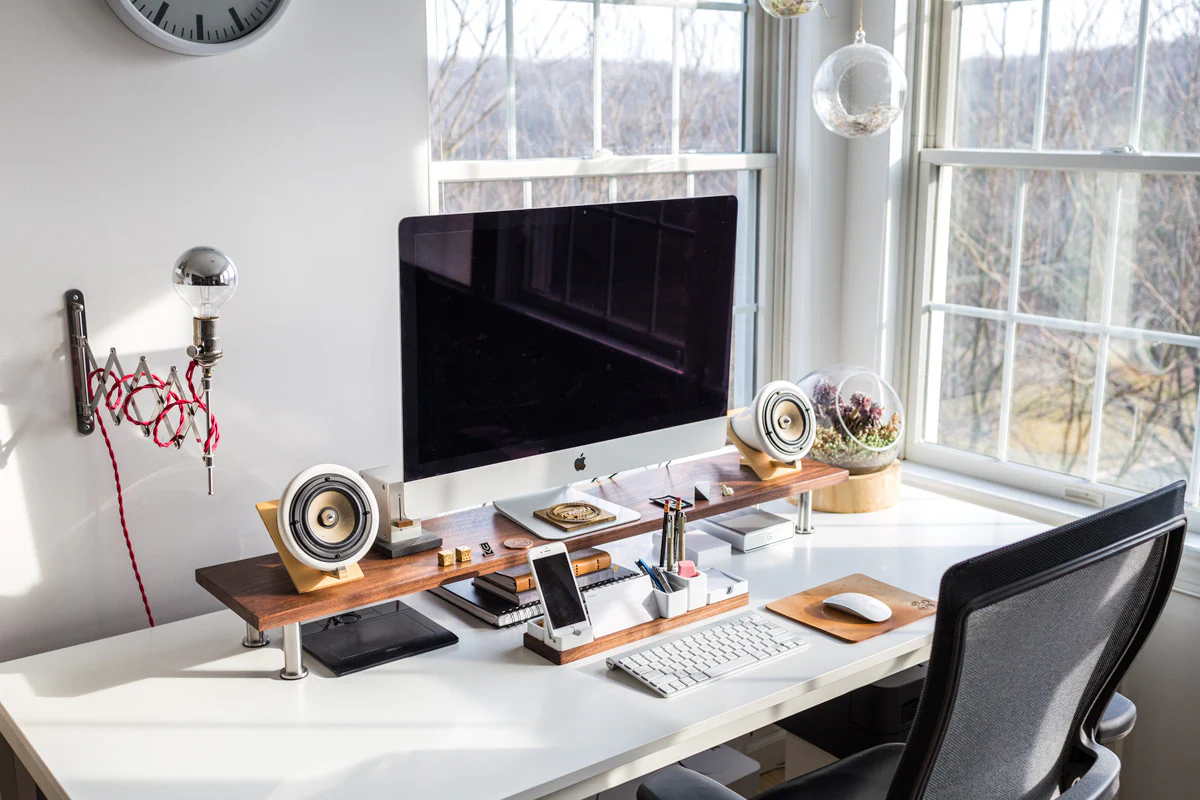
Where you place your desk has a direct impact on your focus, energy levels, and overall productivity. Even the most comfortable chair and spacious desk cannot compensate for poor positioning. Desk placement influences lighting, posture, distraction levels, and workflow efficiency.
Whether you’re working from home full-time or managing occasional tasks, thoughtful placement creates a more effective environment. With proper layout planning and the right furniture, your workspace can support concentration and long-term comfort.
Let’s explore practical desk placement ideas that enhance productivity while maintaining a clean, organized home office.
Position Near Natural Light
Natural light improves mood and reduces eye strain.
Ideally:
-
Place your desk perpendicular to a window
-
Avoid direct glare on your screen
-
Use sheer curtains to soften harsh sunlight
Facing a window can provide inspiration, but too much brightness may cause screen reflection. Side positioning often works best.
When selecting workspace pieces, you can shop Miami Furniture online to find desks that complement window placement and room proportions.
Face the Entry When Possible
Psychologically, it’s beneficial to see the room entrance while working.
Facing the door:
-
Reduces subconscious distraction
-
Improves awareness
-
Creates a sense of control
If direct positioning isn’t possible, angling the desk slightly toward the entrance can provide similar benefits.
Avoid High-Traffic Areas
Distractions reduce productivity.
Avoid placing your desk:
-
Near frequently used doorways
-
In the center of a busy living space
-
Directly beside noisy appliances
Choose a quieter corner where interruptions are minimized.
High-quality home office desks and chairs work best when paired with intentional, distraction-free placement.
Use Corners Efficiently
Corner desk placement maximizes available space.
Benefits include:
-
Better room utilization
-
Defined work boundaries
-
Improved focus
L-shaped desks are especially effective for corner placement, offering additional surface area without dominating the room.
You can explore space-efficient designs when you shop Miami Furniture online for versatile home office solutions.
Create a Dedicated Zone
If your home office shares space with another room, define a clear work area.
Use:
-
Area rugs
-
Bookshelves as dividers
-
Distinct lighting
-
Coordinated office furniture
Clear boundaries help separate work from relaxation, improving mental focus.
Well-designed home office desks and chairs contribute to a structured and professional feel.
Ensure Proper Wall Clearance
Leave enough space behind and around your desk.
Allow:
-
At least 30 inches behind the chair
-
Clear access to storage units
-
Room for comfortable movement
Crowded positioning creates physical and mental tension.
Align Desk Height With Ergonomics
Placement and ergonomics go hand in hand.
When seated:
-
Feet should rest flat on the floor
-
Elbows should form a 90-degree angle
-
Monitor should be at eye level
Even the best desk placement won’t improve productivity if ergonomics are neglected.
Testing ergonomic setups while browsing home office desks and chairs ensures proper alignment.
Avoid Facing Blank Walls Without Purpose
While facing a wall can reduce distraction, it may also feel isolating.
To improve this setup:
-
Add minimal artwork
-
Install floating shelves
-
Use neutral colors
-
Maintain clutter-free surfaces
This creates visual interest without overwhelming the space.
Position Near Storage for Efficiency
Desk placement should consider storage accessibility.
Keep:
-
Filing cabinets within reach
-
Shelves above or beside the desk
-
Frequently used items nearby
Efficient access reduces time wasted searching for materials.
When you shop Miami Furniture online, consider desks with integrated storage for streamlined organization.
Incorporate Balanced Lighting
Desk lamps should be positioned opposite your dominant hand to reduce shadows.
Combine:
-
Natural light
-
Task lighting
-
Overhead ambient lighting
Balanced lighting enhances focus and reduces fatigue.
Avoid Directly Facing Walls of Distraction
Avoid placing your desk directly facing:
-
Televisions
-
Open shelving with clutter
-
High-traffic windows
Visual noise competes for attention and lowers concentration levels.
Maintain Clean Cable Management
Desk placement should allow:
-
Easy outlet access
-
Concealed cable routing
-
Organized power strips
Visible cables create visual clutter and disrupt productivity.
Consider Long-Term Flexibility
Your work needs may evolve.
Choose placement that:
-
Allows furniture rearrangement
-
Supports additional equipment
-
Adapts to future changes
Flexible positioning ensures your workspace remains effective over time.
Well-constructed home office desks and chairs offer durability and adaptability for evolving routines.
Final Thoughts
Desk placement plays a powerful role in shaping productivity. From natural light positioning and traffic flow to ergonomic alignment and distraction control, each detail matters.
By carefully planning your workspace layout and selecting furniture that supports comfort and efficiency, you create an environment designed for focus. When placement and function align, productivity becomes smoother, more consistent, and more sustainable.